
This post contains affiliate links. As an Amazon Associate I earn from qualifying purchases, at no extra cost to you.
The best non toxic cookware for most kitchens is uncoated: cast iron, carbon steel, stainless steel and enameled cast iron. They contain no PFAS coating that can scratch off or break down with heat. My top picks are the Lodge cast iron skillet and the All-Clad D3 stainless steel pan. No material is perfect, though. Stainless steel releases small amounts of nickel into acidic food, cast iron adds iron, and ceramic coated pans are PFAS free but barely studied. Here is what the research actually shows.
As a biologist, the first thing I think of with nonstick pans is birds. Bird lungs are far more efficient than ours, with air sacs that push air through in one direction, which is why canaries once warned miners about gas. That same efficiency makes pet birds extremely sensitive to the fumes of overheated nonstick pans. If the fumes from a pan can kill a small bird, it is worth understanding what is going on.
What non toxic cookware actually means
Most of the worry is about PFAS, the so called forever chemicals. Three names get mixed up:
- PTFE (polytetrafluoroethylene, best known as Teflon) is the slippery coating on classic nonstick pans. It is itself a PFAS polymer.
- PFOA was a chemical once used to make PTFE. Under an EPA program launched in 2006, the major manufacturers committed to eliminating it by 2015, and they report that they did.
- PFOA free on a label therefore does not mean PFAS free. A PFOA free nonstick pan can still be coated in PTFE.
PFAS matter because they barely break down in nature. In 2024 the EPA set a drinking water limit of just 4 parts per trillion for PFOA and for PFOS, another member of the family. Pans are not a major source of PFAS in your body, but making and disposing of them adds to the load in the environment.
Which is healthier, Teflon or ceramic?
Both are generally considered safe when used gently and not overheated. The risks come from heat and from damage.
What happens when you overheat a nonstick pan
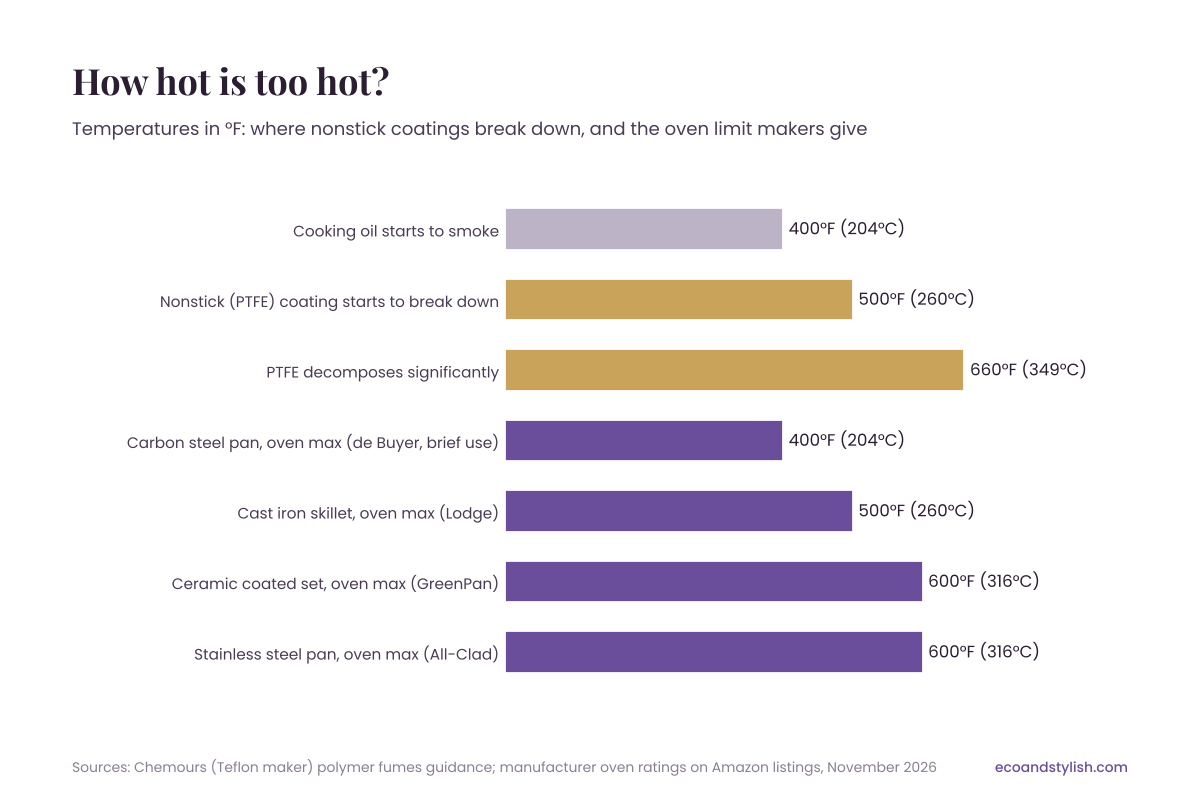
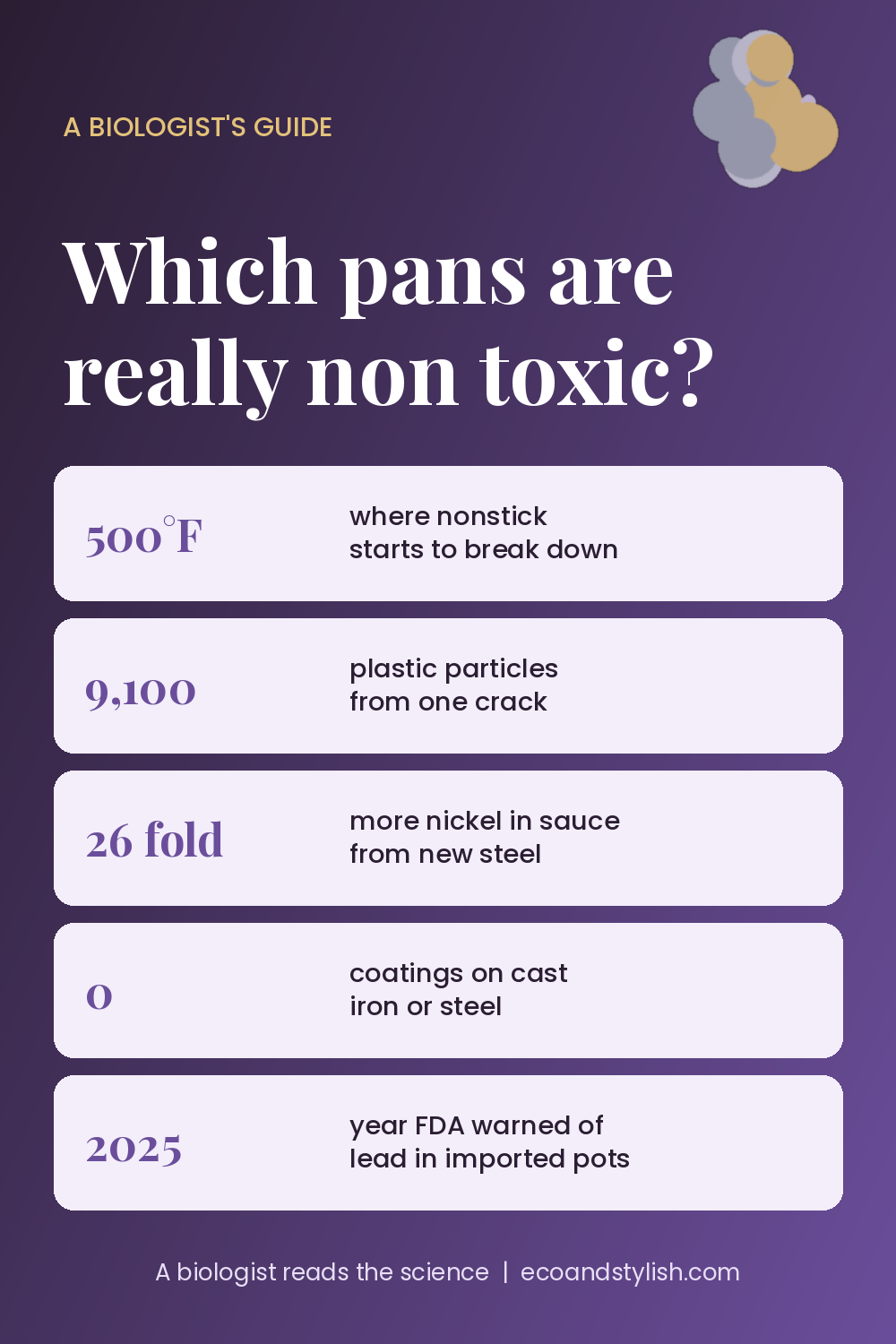
According to Chemours, the company behind Teflon, PTFE coatings start to deteriorate at about 500°F (260°C) and decompose significantly above about 660°F (349°C). An empty pan on a high burner can get there. The fumes can cause polymer fume fever, a short flu like illness in people, and they can kill pet birds. In 2021, Cornell University veterinarians reported three ducks that died suddenly from PTFE fumes.
Case study: scratched pans and microplastics
In 2022, researchers at Flinders University and the University of Newcastle in Australia used Raman imaging to count the plastic particles released from damaged nonstick coatings.
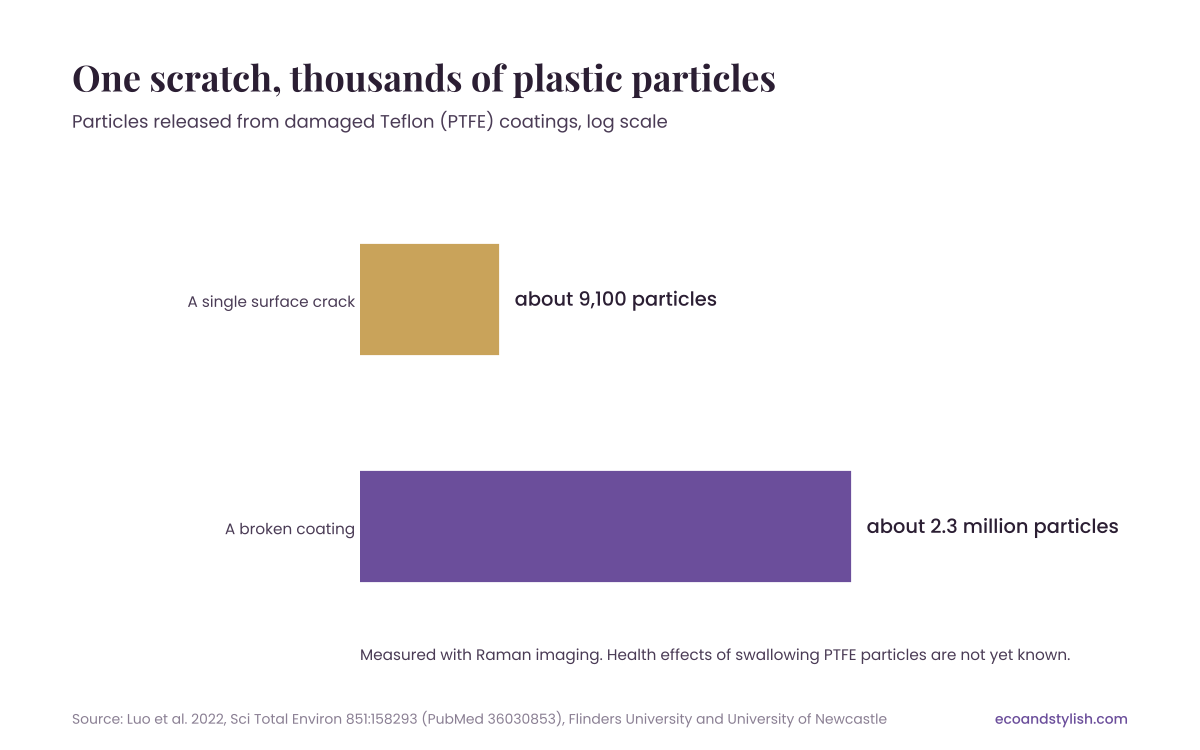
A single surface crack released about 9,100 particles, and a broken coating about 2.3 million. What those particles do inside the body is not yet known, but there is no reason to keep eating from a pan that is flaking. Replace scratched nonstick pans.
Is ceramic cookware safe to use?
Ceramic nonstick pans are usually metal pans coated with a sol gel, a thin glassy layer made mostly from silica. They contain no PTFE and are a reasonable choice. But there is far less research on them than on Teflon, and brands keep their formulas secret.
The best study I found, by Golja and colleagues in 2017, tested ceramic style coatings containing titanium dioxide nanoparticles. The coating held up to heat up to about 350°C (662°F), but titanium containing particles moved into acidic liquids, and scratching was the main way they escaped. So the same advice applies: no metal utensils, no abrasive scrubbing, and replace the pan when the surface wears.
Do not confuse ceramic coated pans with solid ceramic cookware or with enameled cast iron. They are different materials.
Is it better to cook with stainless steel or ceramic?
For durability, stainless steel wins easily. It has no coating to wear off and can last decades. Its one drawback is metal leaching.
Case study: nickel and chromium in tomato sauce
In a 2013 study by Kamerud, Hobbie and Anderson at Oregon State University, tomato sauce was cooked for 6 hours with samples of new stainless steel.
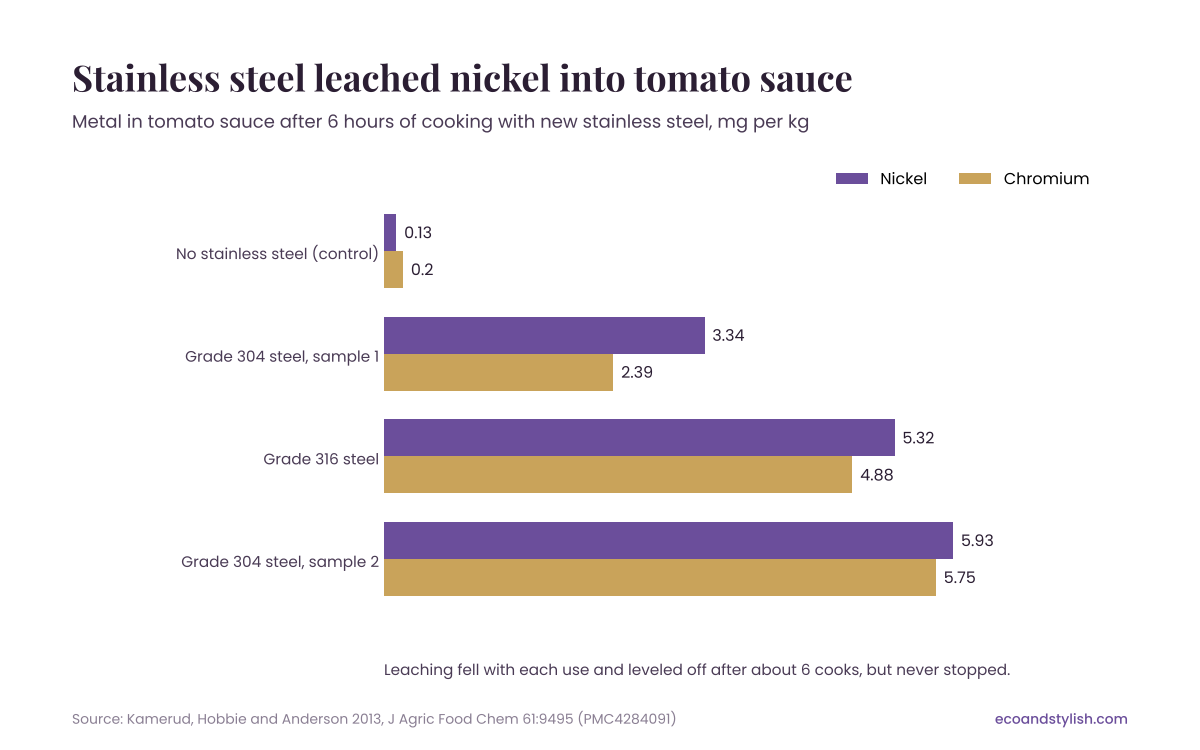
- Nickel in the sauce rose up to 26 fold compared with sauce cooked without steel.
- New steel leached the most. Leaching dropped with each use and leveled off after about 6 cooking sessions.
- Even by the tenth session, a serving still picked up about 88 micrograms of nickel and 86 micrograms of chromium.
For most people this is not a concern. But if you have a nickel allergy, avoid simmering acidic foods like tomato sauce for hours in stainless steel, and choose enameled cast iron for them instead.
Is enameled cast iron non toxic?
Yes, enameled cast iron from reputable brands such as Le Creuset and Lodge is one of the safest choices. The glass like enamel does not react with acidic food and has no PFAS coating. The rare concern is lead or cadmium in the enamel of some cheap or vintage pieces, so buy from brands that state their enamel is lead and cadmium free, and retire a pot if the inner enamel chips badly.
What kinds of pots and pans are bad for you?
- Some imported aluminum and brass cookware. In August 2025, the FDA warned about imported cookware that may leach lead, including some aluminum, brass and Hindalium or Indalium pots, and noted that there is no known safe level of lead exposure.
- Scratched or flaking nonstick pans, for the reasons above.
- Uncoated aluminum used for acidic food. Aluminum dissolves into acidic and salty foods. The European Food Safety Authority sets a tolerable weekly intake of 1 mg of aluminum per kilogram of body weight and notes that many Europeans may exceed it from all food sources. Anodized or clad aluminum is sealed and much less of a concern.
Cast iron: a bonus for iron, a caution for some
Cooking in cast iron adds iron to food. A classic 1986 study by Brittin and Nossaman found that most of the 20 foods tested contained significantly more iron when cooked in iron pots, especially acidic, moist foods cooked for a long time. That is a plus if you are low in iron, but people with hemochromatosis, a condition of iron overload, should limit it.
Best non toxic cookware
I chose these on material, durability, buyer reviews and honest claims. US searches for non toxic cookware roughly double in November, so many of these go on sale around Black Friday. Check the deals, but buy for decades, not for the discount.
| Pan | Material | Oven limit | Best for |
|---|---|---|---|
| Lodge cast iron skillet | Cast iron | 500°F | Best overall, made in USA |
| All-Clad D3 fry pan | Stainless steel | 600°F | Best stainless, made in USA |
| Lodge enameled Dutch oven | Enameled cast iron | Check listing | Tomato sauce, soups, stews |
| de Buyer Mineral B | Carbon steel | 400°F, brief | Searing, a lighter skillet |
| GreenPan Valencia Pro set | Ceramic coated aluminum | 600°F (lids 425°F) | Easy nonstick without PTFE |
1. Lodge Pre Seasoned Cast Iron Skillet, 10.25 Inch
The most reviewed pan on this list, with more than 87,000 ratings and a 4.6 star average. Made in the USA, PFAS free, naturally nonstick once seasoned, and practically indestructible. It is heavy, and long simmered tomato sauce can strip the seasoning.
2. All-Clad D3 Stainless Steel 10 Inch Fry Pan with Lid
Three layer stainless steel with an aluminum core sealed inside, made in the USA with global components, and oven safe to 600°F. It will outlast any coated pan. Food sticks until you learn to preheat it and use a little fat, and it is the priciest pick.
3. Lodge Essential Enamel Cast Iron Dutch Oven, 6 Quart
Rated 4.7 stars by more than 39,000 buyers, and listed as PFAS free. Enameled cast iron is my choice for acidic dishes like tomato sauce and chili. Treat the enamel gently to avoid chips.
4. de Buyer Mineral B Carbon Steel Fry Pan, 12.5 Inch
A French carbon steel pan with no coating, beloved by chefs, with nearly 16,000 ratings. It becomes naturally nonstick with seasoning and is lighter than cast iron. It needs drying and oiling to prevent rust, and the oven limit is 400°F for short use only.
5. GreenPan Valencia Pro 11 Piece Ceramic Nonstick Set
If you want easy nonstick without PTFE, this is a popular ceramic coated set, and the listing says its coating is NSF certified and PFAS free. Rated 4.2 stars, the lowest here, mostly because ceramic coatings wear out within a few years. Use wooden or silicone tools and moderate heat.
A few good pans are also the heart of a minimalist kitchen setup, and they pair well with these sustainable kitchen gadgets.
PFAS cookware laws in 2026
Several US states now restrict PFAS in cookware. Minnesota banned cookware with intentionally added PFAS from January 2025, and Colorado, Maine, Vermont and Connecticut have bans starting in 2026. California has required PFAS disclosure on cookware since 2023, but in October 2025 its governor vetoed a full ban. If you live in one of these states, coated pans in stores are already changing.
The bottom line
There is no perfectly non toxic pan, but there are very safe ones. Cast iron, carbon steel, stainless steel and enameled cast iron have no coating to break down, and they last for decades. If you love nonstick, use it on low to medium heat, never preheat it empty, keep birds out of the kitchen, and replace it once it scratches.
Non toxic cookware FAQ
What is the safest cookware to use?
Uncoated cookware is the safest choice for most people: cast iron, carbon steel, stainless steel and enameled cast iron. They have no PFAS coating to scratch or break down, and they last for decades.
Is nonstick cookware safe if it says PFOA free?
PFOA free means the pan was made without PFOA, which major makers phased out by 2015. The coating itself is usually still PTFE, a PFAS. It is considered safe at normal temperatures, but avoid overheating and replace it when scratched.
At what temperature does Teflon release toxic fumes?
According to its manufacturer, PTFE coatings start to deteriorate at about 500°F (260°C) and decompose significantly above about 660°F (349°C). The fumes can cause flu like symptoms in people and can kill pet birds.
Is ceramic cookware safe?
Ceramic coated pans contain no PTFE and are generally considered safe, but they are much less studied. One study found titanium containing particles moved into acidic liquids from a ceramic style coating, mainly when scratched.
Is stainless steel safe if I have a nickel allergy?
Stainless steel leaches small amounts of nickel, especially new pans and long cooked acidic foods. If you have a nickel allergy, use enameled cast iron or glass for tomato sauce and other acidic dishes.
Does cooking in cast iron add iron to food?
Yes. Studies found most foods contained significantly more iron after cooking in cast iron, especially acidic, moist foods cooked for a long time. That helps people low in iron but is not ideal for people with iron overload.

Erzsebet Frey (Eli Frey) is a biologist and science communicator with Bachelor of Science in Biology, and Master of Science in Ecology from the University of Belgrade. Originally from Serbia, she has lived in Sri Lanka since 2017. Eli has worked internationally in countries like Oman, Brazil, Germany, and Sri Lanka. In 2018, she expanded into SEO and blogging, completing courses from UC Davis and Edinburgh. Eli has founded multiple websites focused on biology, ecology, environmental science, sustainable and simple living, and outdoor activities. She enjoys creating nature and simple living videos on YouTube and participates in speleology, diving, and hiking.