
This post contains affiliate links. As an Amazon Associate I earn from qualifying purchases, at no extra cost to you.
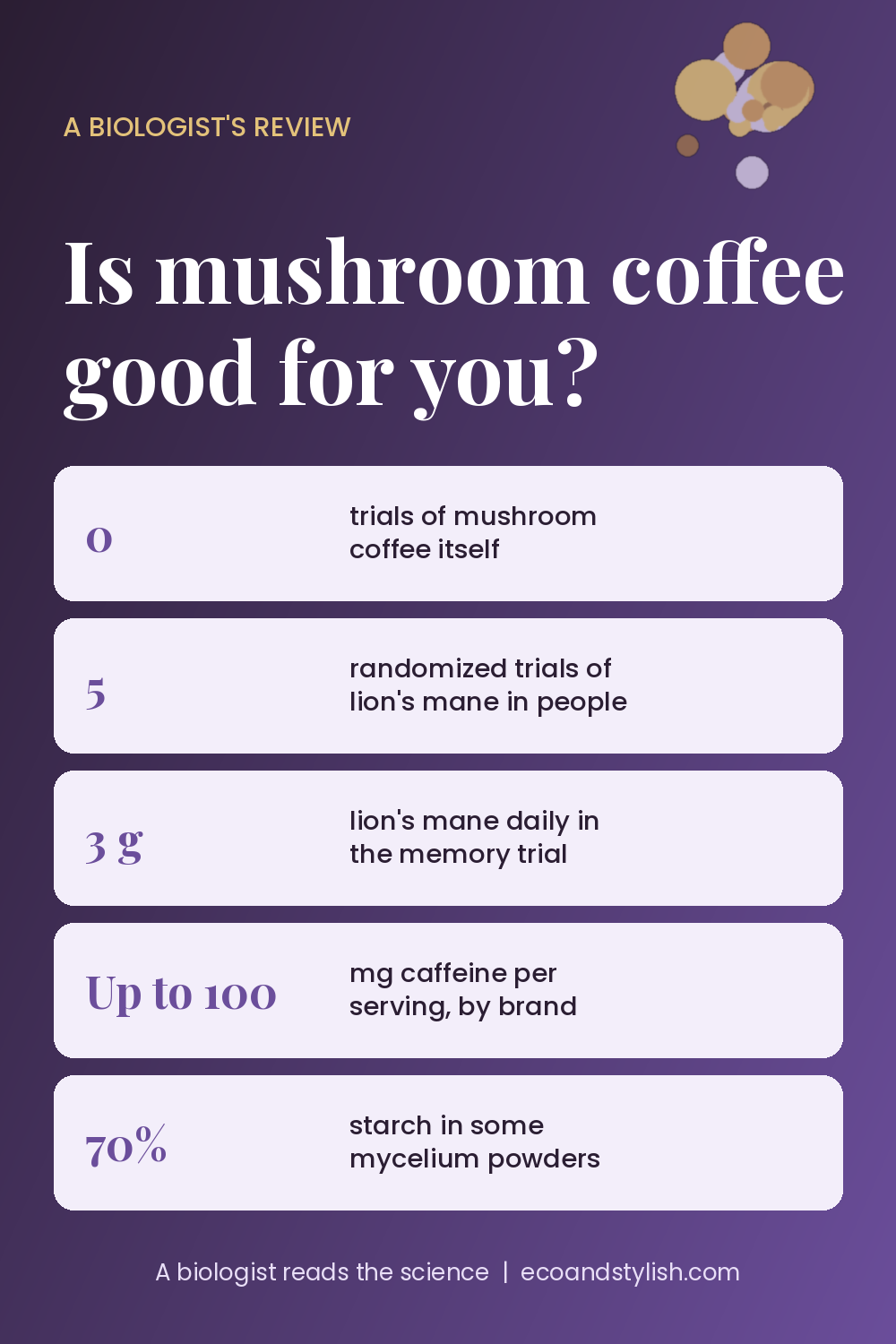
Mushroom coffee can be a pleasant, often lower caffeine coffee, but its health benefits are mostly borrowed from other research. I found no randomized trials of mushroom coffee itself. The promises about focus, immunity and stress come from small studies of single mushroom extracts, usually at doses several times higher than a cup contains. Some blends are also mostly grain starch rather than mushroom. If you enjoy it, choose a brand that states fruiting body extract and its beta glucan content, and watch the caffeine.
As a biologist, I find mushrooms endlessly interesting. Fungi are closer relatives of animals than of plants, and the mushroom you see is only the fruiting body of a much bigger hidden network called the mycelium. That difference, fruiting body versus mycelium, turns out to matter a lot for what ends up in your cup.
What is mushroom coffee?
Mushroom coffee is ordinary coffee, or a coffee substitute, mixed with powdered extracts of so called functional mushrooms. The usual species are:
- Lion’s mane (Hericium erinaceus), sold for focus and memory.
- Reishi (Ganoderma), sold for calm and immunity.
- Cordyceps (Cordyceps militaris), sold for energy and exercise.
- Chaga (Inonotus obliquus), a woody growth on birch trees, sold as an antioxidant.
- Turkey tail (Trametes versicolor), sold for immunity.
None of these is approved to treat anything. As the National Cancer Institute puts it, the FDA has not approved medicinal mushrooms as a treatment for cancer or any other medical condition.
Does mushroom coffee have caffeine?
Usually yes, unless it is made with cacao or another coffee substitute. A regular 8 oz cup of brewed coffee has about 95 mg of caffeine. Many mushroom coffees have about half of that, but not all of them.
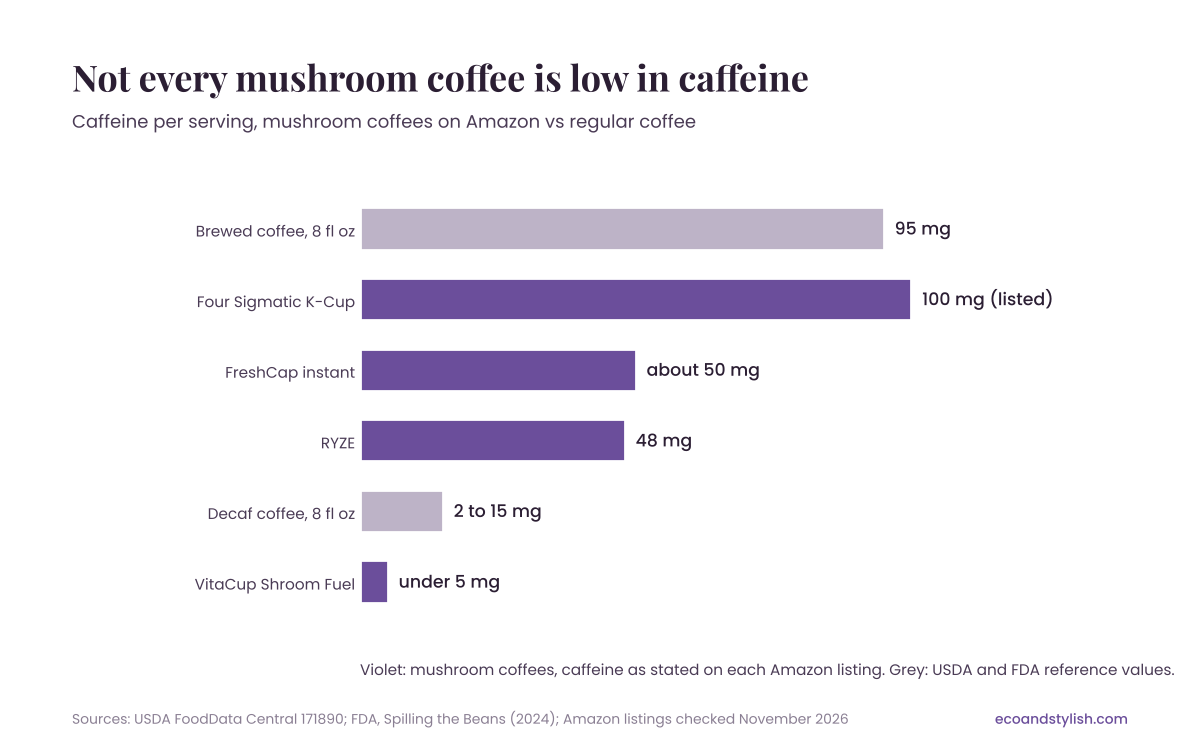
If you switched to mushroom coffee and still feel jittery, check the label. Some K-Cup style mushroom coffees contain as much caffeine as a normal cup. The FDA considers up to 400 mg a day generally safe for healthy adults.
Mushroom coffee benefits: what the human trials show
Most claims on mushroom coffee boxes come from research on single mushrooms. Here is how many randomized controlled trials I found in PubMed for each one.
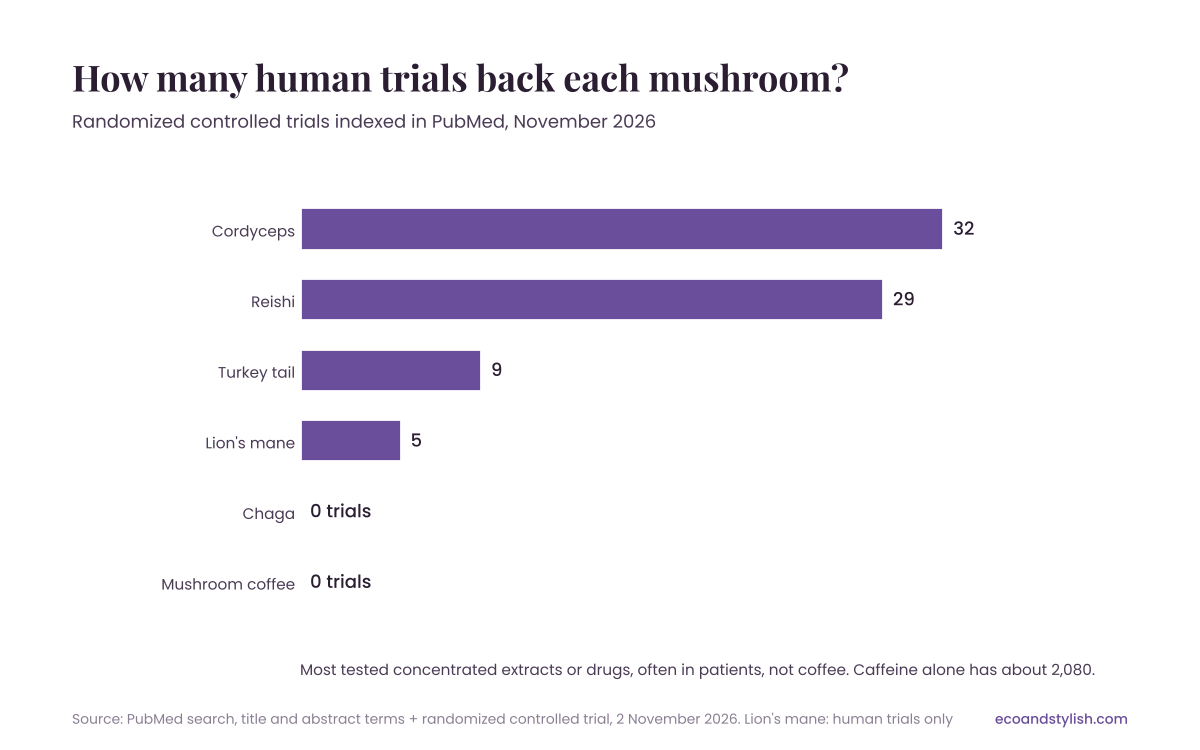
The counts look bigger than they are. Many of those trials used concentrated extracts or prescription style products in patients, not a spoon of powder in coffee.
Lion’s mane and memory
The best known study is a 2009 Japanese trial by Mori and colleagues. Thirty adults aged 50 to 80 with mild cognitive impairment took tablets of lion’s mane fruiting body, 3 g a day, or a placebo for 16 weeks. The lion’s mane group scored better on a cognitive scale, but the effect faded within 4 weeks of stopping.
In a 2023 trial by Docherty and colleagues, 41 healthy young adults took 1.8 g a day. A single dose sped up one attention test, but after 28 days the only signal was a trend toward less stress that did not reach significance. A 2025 systematic review found just 5 randomized trials of lion’s mane in people, plus 3 pilot studies.
The NIH LiverTox database sums it up: lion’s mane appears safe for the liver, but its claimed effects on the brain have not been shown to any great extent in humans.
Reishi
A 2015 Cochrane review pooled 5 trials with 398 people who took reishi for 12 to 16 weeks. It found no effect on blood sugar, cholesterol, blood pressure or weight. There is also a quality problem: in a 2017 test of 19 reishi supplements sold in the US, only 5 matched their labels.
As a biologist, my favorite finding is from a 2018 DNA study by Loyd and colleagues. None of the 20 products labeled Ganoderma lucidum actually contained that species. Most contained Ganoderma lingzhi, a close Asian relative. It is a good reminder that mushroom names on labels are not always what they seem.
Cordyceps and exercise
The results are mixed. In a 12 week trial of 20 adults aged 50 to 75, a cordyceps extract raised two markers of exercise capacity by about 8 to 11%, but not maximal oxygen uptake. In 22 trained cyclists, 3 g a day for 5 weeks had no effect on endurance at all.
Chaga and turkey tail
I found no randomized trials of chaga in people. Turkey tail has more research, mainly an extract called PSK that has been used alongside cancer treatment in Japan, which says little about a daily coffee.
Case study: real mushroom or mostly grain starch?
Here is the detail most labels do not explain. Many mushroom powders are not made from the mushroom at all. They come from mycelium, the root like network of the fungus, grown on sterilized oats or rice. The whole block, grain included, is dried and ground.
In 2016, McCleary and Draga published a method to measure the two main sugars in mushroom products: beta glucan, the fungal fiber linked to most of the research, and alpha glucan, which is mostly starch. Their results show why the source matters.
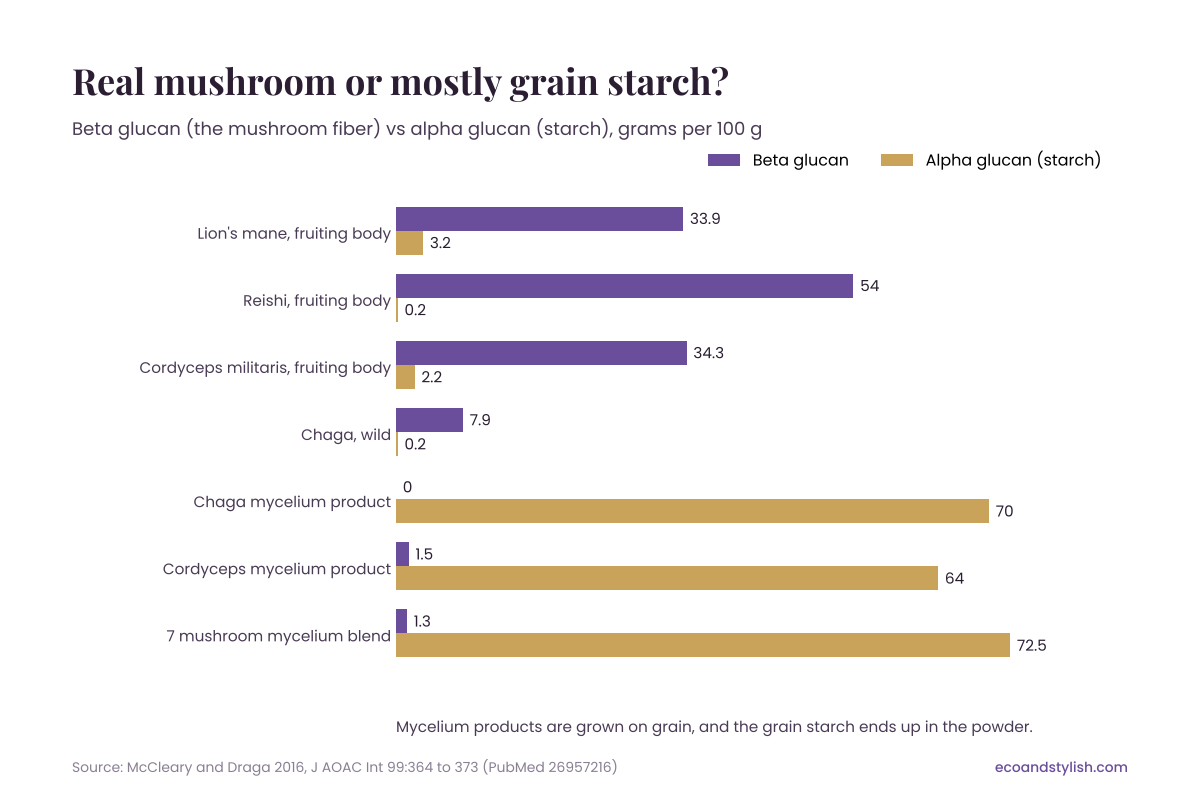
- Lion’s mane fruiting body: 33.9 g of beta glucan per 100 g and only 3.2 g of starch.
- A 7 mushroom mycelium blend: 1.3 g of beta glucan and 72.5 g of starch.
- A chaga mycelium product had essentially no beta glucan and 70 g of starch.
So a powder can honestly say 1,000 mg of mushroom and still be mostly oat starch. Look for fruiting body extract with a stated beta glucan percentage.
The dose problem: a cup vs a clinical trial
Even a good blend has a dose gap. The lion’s mane memory trial used 3 g a day. A typical mushroom coffee contains 250 mg to 1,000 mg of mushroom extract in total, often split between several species. One cup gives you a small fraction of what the trials tested, so it is not fair to expect trial results from it.
Mushroom coffee side effects and who should skip it
- Digestive upset: mild stomach discomfort is the most common complaint in lion’s mane studies. Feeling weird after mushroom coffee is often this, or simply caffeine.
- Kidneys and chaga: chaga is very high in oxalate. Doctors have reported kidney failure in people who took large amounts of chaga powder for months, including a 72 year old woman who took 4 to 5 teaspoons a day for 6 months. Skip chaga if you have kidney disease or kidney stones.
- Liver: there are rare case reports of liver injury after reishi powder.
- Allergy: shiitake can cause a striking whip like skin rash in sensitive people, and a 2026 case report described it after mushroom coffee.
- Medicines: ask your doctor if you take blood thinners, diabetes or blood pressure medicines, or immune suppressing drugs.
- Pregnancy and breastfeeding: there is no safety data, so most brands advise against it.
Is mushroom coffee good for gut health?
Beta glucans are a type of fiber, and fiber feeds gut bacteria. But at the small doses in one cup, and with mycelium products that contain little beta glucan, the effect is likely tiny. I found no published trials of mushroom coffee and gut health, and no lab tests of its acidity. If coffee upsets your stomach, a lower caffeine blend may still feel gentler simply because it contains less coffee.
Best mushroom coffee: how I would choose
I chose these on transparency: caffeine stated, mushrooms named, and ideally fruiting body extract and beta glucan disclosed.
| Coffee | Caffeine | Transparency | Best for |
|---|---|---|---|
| FreshCap Premium | about 50 mg | 29% beta glucans stated | Best overall |
| Four Sigmatic K-Cups | 100 mg listed | Fruiting body stated | Pod machines |
| RYZE | 48 mg | No form or beta glucan stated | Most popular |
| Laird Superfood ground | Not stated | Little detail | Drip and pour over |
| VitaCup Shroom Fuel | under 5 mg | Amounts not stated | Almost caffeine free |
1. FreshCap Premium Mushroom Coffee
Organic instant coffee with six mushroom extracts and about 50 mg of caffeine, with around 4,700 reviews. It is one of the few listings that states a guaranteed beta glucan level, 29%, which is exactly what I want to see. The listing does not say fruiting body in words, so check the brand’s own site if that matters to you.
2. Four Sigmatic Mushroom Coffee K-Cups
Dark roast coffee with 250 mg of lion’s mane extract per cup and nearly 7,000 reviews. The brand states it uses the fruiting body. Note the caffeine, listed at 100 mg, about the same as regular coffee, and the single use pods.
3. RYZE Mushroom Coffee
The best known mushroom coffee, with more than 21,000 reviews and 48 mg of caffeine. It tastes mild and creamy thanks to MCT oil. But the listing does not state fruiting body or mycelium, beta glucan content, or how much of each mushroom it contains, and it includes shiitake.
4. Laird Superfood Peruvian Coffee with Functional Mushrooms
Real ground organic coffee for a drip machine or pour over, blended with chaga, lion’s mane and cordyceps, rated 4.6 stars. A good choice if you want normal coffee with a little mushroom, though the listing gives no mushroom amounts.
5. VitaCup Shroom Fuel
A cacao based coffee alternative with chaga and lion’s mane and under 5 mg of caffeine. Useful if you are cutting caffeine, but it is not really coffee and the mushroom amounts are not listed.
If you use pods, look for a recycling option or a refillable pod. Small swaps like this are part of a plastic free lifestyle.
My verdict as a biologist
Mushroom coffee is a nice drink, not a supplement with proven effects. Enjoy it for the taste and the gentler caffeine, choose brands that disclose fruiting body extract and beta glucan, skip chaga if your kidneys are not healthy, and be wary of any jar that promises better memory or immunity. I take the same approach to skincare trends like copper peptides: follow the evidence, not the marketing.
This article is for education only and is not medical advice. Talk to your doctor before using mushroom products if you are pregnant, breastfeeding, take medicines, or have kidney or liver disease.
Mushroom coffee FAQ
Is mushroom coffee actually good for you?
It is generally safe for healthy adults and often has less caffeine than regular coffee, but there are no trials of mushroom coffee itself. Its claimed benefits come from small studies of single mushroom extracts at much higher doses.
Does mushroom coffee have less caffeine than regular coffee?
Often, but not always. Many brands have about 50 mg per serving, about half a regular 95 mg cup, but some mushroom coffee pods list 100 mg, and cacao based versions have almost none.
Why do I feel weird after drinking mushroom coffee?
The most common causes are caffeine and mild digestive upset, which is the side effect most often reported in lion’s mane studies. Stop if you get a rash, which can be an allergy, especially to shiitake.
Is mushroom coffee safe for your kidneys?
Chaga is very high in oxalate, and doctors have reported kidney failure in people who took large amounts of chaga powder for months. Avoid chaga blends if you have kidney disease or kidney stones.
Fruiting body or mycelium: which should I buy?
Fruiting body extracts contain far more beta glucan. In one analysis, mycelium products grown on grain were 64 to 72.5% starch and contained little beta glucan. Look for fruiting body extract with a stated beta glucan percentage.
Can you drink mushroom coffee while pregnant?
There is no safety data for mushroom extracts in pregnancy or breastfeeding, so most brands advise against it. Talk to your doctor first.

Erzsebet Frey (Eli Frey) is a biologist and science communicator with Bachelor of Science in Biology, and Master of Science in Ecology from the University of Belgrade. Originally from Serbia, she has lived in Sri Lanka since 2017. Eli has worked internationally in countries like Oman, Brazil, Germany, and Sri Lanka. In 2018, she expanded into SEO and blogging, completing courses from UC Davis and Edinburgh. Eli has founded multiple websites focused on biology, ecology, environmental science, sustainable and simple living, and outdoor activities. She enjoys creating nature and simple living videos on YouTube and participates in speleology, diving, and hiking.